
メニュー
Discover the world of play
子どもたちのあそびの環境をデザインしています
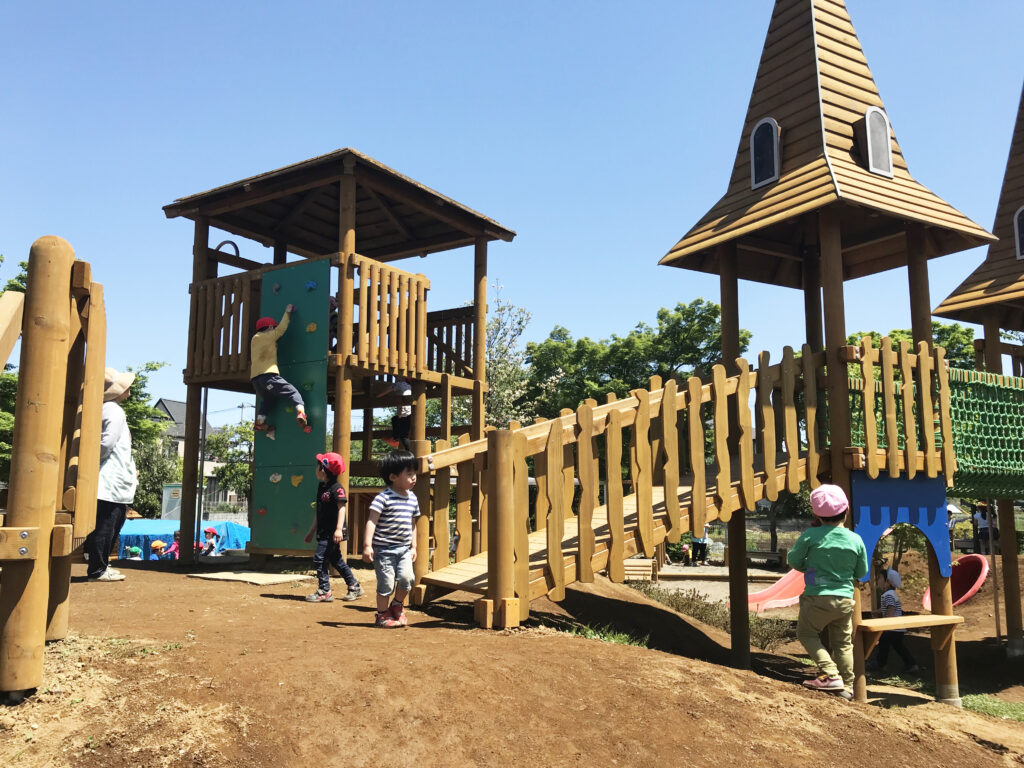
あそび場は子ども達にとって、単に体力向上の為の空間ではなく様々な経験地や発見、感動を繰り返し得られる環境である必要があります
社会性やコミュニケーションやリラクゼーション、気分転換ができる場所、静のあそびとアクティブな動のあそび、低と高、明と暗、広と狭などの反対の環境などをバランスよく配置した空間創りと動線や回遊性など計画することが望ましいと考えています
またそれらは楽しい事、継続してあそぶ事ができる可能性があること、リスクとハザードを見分け計画的に配置していること等、多くのポイントがあります 特に施設様の園庭などは大好きな友達と一緒に助け合い、協力し合い、楽しさを共有し共に育つことが出来るため、都市公園やテーマパークとは違ったあそびを経験できる貴重で特別な空間として位置づけされます
こうして計画された豊かなあそび空間は、PlayValue(あそびの価値)を持ちます
育つあそびの環境創りは広さや、規模などには左右されません。小さなデッドスペースや砂場の改良でもアイディアを活かした人気のあそびスペースとしてアップデート出来ます。まずはあそび空間のコンセプトやマスタープラン計画からエルフェデザインでお手伝いしています
For children, playgrounds should not just be spaces for improving their physical strength, but environments where they can repeatedly gain various experiences, discoveries, and impressions.
We believe that it is desirable to plan spaces that are well-balanced, with places for socialization,communication, relaxation, and mood change, quiet play and active play, low and high, light and dark, wide and narrow, and other opposing environments, and to plan traffic flow and mobility.
There are many points to consider, such as fun, the possibility of continuing to play, and the risk and hazards being distinguished and arranged in a planned manner.
In particular, the playgrounds of facilities are positioned as valuable and special spaces where children can experience play that is different from urban parks and theme parks, because they can help and cooperate with their favorite friends, share the fun, and grow together.
A rich play space planned in this way has PlayValue. Creating a play environment that develops is not dependent on size or scale.
Even a small dead space or a sandbox can be updated into a popular play space by utilizing ideas.
First of all, Elfe Design will help you with the concept of the play space and the master plan.
社会性やコミュニケーションやリラクゼーション、気分転換ができる場所、静のあそびとアクティブな動のあそび、低と高、明と暗、広と狭などの反対の環境などをバランスよく配置した空間創りと動線や回遊性など計画することが望ましいと考えています
またそれらは楽しい事、継続してあそぶ事ができる可能性があること、リスクとハザードを見分け計画的に配置していること等、多くのポイントがあります 特に施設様の園庭などは大好きな友達と一緒に助け合い、協力し合い、楽しさを共有し共に育つことが出来るため、都市公園やテーマパークとは違ったあそびを経験できる貴重で特別な空間として位置づけされます
こうして計画された豊かなあそび空間は、PlayValue(あそびの価値)を持ちます
育つあそびの環境創りは広さや、規模などには左右されません。小さなデッドスペースや砂場の改良でもアイディアを活かした人気のあそびスペースとしてアップデート出来ます。まずはあそび空間のコンセプトやマスタープラン計画からエルフェデザインでお手伝いしています
For children, playgrounds should not just be spaces for improving their physical strength, but environments where they can repeatedly gain various experiences, discoveries, and impressions.
We believe that it is desirable to plan spaces that are well-balanced, with places for socialization,communication, relaxation, and mood change, quiet play and active play, low and high, light and dark, wide and narrow, and other opposing environments, and to plan traffic flow and mobility.
There are many points to consider, such as fun, the possibility of continuing to play, and the risk and hazards being distinguished and arranged in a planned manner.
In particular, the playgrounds of facilities are positioned as valuable and special spaces where children can experience play that is different from urban parks and theme parks, because they can help and cooperate with their favorite friends, share the fun, and grow together.
A rich play space planned in this way has PlayValue. Creating a play environment that develops is not dependent on size or scale.
Even a small dead space or a sandbox can be updated into a popular play space by utilizing ideas.
First of all, Elfe Design will help you with the concept of the play space and the master plan.
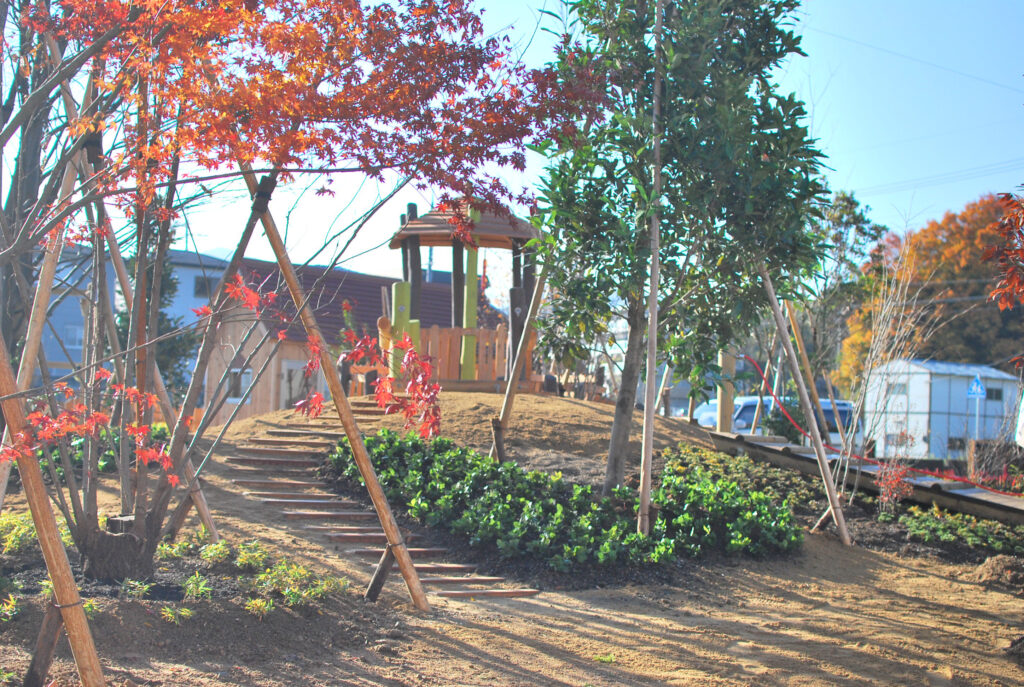
自然となかよく
整備の行き届いた平地に整然と遊具を配備するスタイルから、大地の起伏、段差、斜面など自然の地形をそのまま活かした場所にあそびのアクティビティを配置し、樹木の植栽や低木、草花、ハーブなどを無理なく配置する
また自然物である、水、砂、土、泥、小石、木片などを豊富に用意し子ども達があそびで必要なときにいつでも利用できるような環境であるなら、森の中を探検したり冒険しているようなワクワク感が得られます
またあそびに草花や落ち葉、小さな虫たち等、身近な自然物は意図しない観察や驚きも提供してくれます
自然はあそびを更に豊かに展開させます
Actively incorporate nature.
Instead of arranging play equipment in an orderly manner on well-maintained flat ground, place play activities in areas that utilize the natural terrain, such as the undulating ground, steps, and slopes, and place trees, shrubs, flowers, herbs, etc. in a natural way.
Also, if there is an environment where natural objects such as water, sand, soil, mud, pebbles, and wood chips are abundantly available and children can use them whenever they need to play, they will feel the excitement of exploring and adventuring in the forest.
Familiar natural objects such as flowers, fallen leaves, and small insects also provide unexpected observations and surprises during play.
Nature will further enrich play.
整備の行き届いた平地に整然と遊具を配備するスタイルから、大地の起伏、段差、斜面など自然の地形をそのまま活かした場所にあそびのアクティビティを配置し、樹木の植栽や低木、草花、ハーブなどを無理なく配置する
また自然物である、水、砂、土、泥、小石、木片などを豊富に用意し子ども達があそびで必要なときにいつでも利用できるような環境であるなら、森の中を探検したり冒険しているようなワクワク感が得られます
またあそびに草花や落ち葉、小さな虫たち等、身近な自然物は意図しない観察や驚きも提供してくれます
自然はあそびを更に豊かに展開させます
Actively incorporate nature.
Instead of arranging play equipment in an orderly manner on well-maintained flat ground, place play activities in areas that utilize the natural terrain, such as the undulating ground, steps, and slopes, and place trees, shrubs, flowers, herbs, etc. in a natural way.
Also, if there is an environment where natural objects such as water, sand, soil, mud, pebbles, and wood chips are abundantly available and children can use them whenever they need to play, they will feel the excitement of exploring and adventuring in the forest.
Familiar natural objects such as flowers, fallen leaves, and small insects also provide unexpected observations and surprises during play.
Nature will further enrich play.
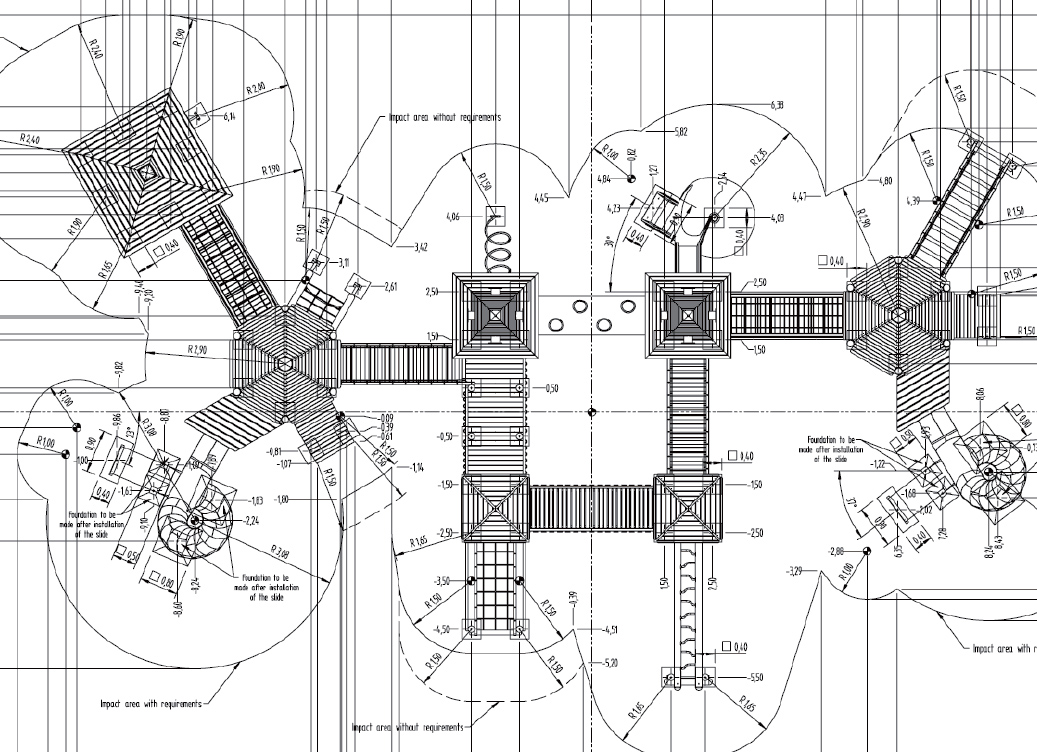
まずマスタープラン(目的とレイアウト)を
植栽やPlayground equipment(遊具、アクティビティ)のレイアウトはあそびの空間創りで、遊具をどれにするか決定することと同様に重要なポイントです
レイアウトはあそびの展開上必要な子ども達のあそびの連続性や動線、その空間の特性や楽しさまで左右する重要なポイントであり園庭計画の要です
空きスペースにあわせたモノ選びや、断片的なアクティビティの追加ではなく、全体的なあそび空間のマスタープランに沿った導入は統一性があり期待したあそびの価値が得られます
空間を構成するPlayground equipmentなどは同一の機能を持つバリエーションがありますので、過剰な機能、重複する機能や意図する目的を達成できないマテリアルの選択を避けるためにも、ゾーニングを含むマスタープランが豊かな園庭創りの羅針盤となります
Master Plan (Purpose and Layout)
The layout of plants and playground equipment is as important as deciding which equipment to use in creating a play space.
The layout is an important point that determines the continuity and movement of children’s play, which is necessary for the development of play, and even the characteristics and enjoyment of the space, and is the key to planning a playground.
Rather than selecting things to fit the available space or adding fragmented activities, introducing them in accordance with the overall master plan of the play space will create unity and provide the expected value of play.
Since there are variations with the same functions for the playground equipment that makes up the space, a master plan including zoning will be a compass for creating a rich playground, in order to avoid selecting materials that have excessive functions, overlapping functions, or that do not achieve the intended purpose.
植栽やPlayground equipment(遊具、アクティビティ)のレイアウトはあそびの空間創りで、遊具をどれにするか決定することと同様に重要なポイントです
レイアウトはあそびの展開上必要な子ども達のあそびの連続性や動線、その空間の特性や楽しさまで左右する重要なポイントであり園庭計画の要です
空きスペースにあわせたモノ選びや、断片的なアクティビティの追加ではなく、全体的なあそび空間のマスタープランに沿った導入は統一性があり期待したあそびの価値が得られます
空間を構成するPlayground equipmentなどは同一の機能を持つバリエーションがありますので、過剰な機能、重複する機能や意図する目的を達成できないマテリアルの選択を避けるためにも、ゾーニングを含むマスタープランが豊かな園庭創りの羅針盤となります
Master Plan (Purpose and Layout)
The layout of plants and playground equipment is as important as deciding which equipment to use in creating a play space.
The layout is an important point that determines the continuity and movement of children’s play, which is necessary for the development of play, and even the characteristics and enjoyment of the space, and is the key to planning a playground.
Rather than selecting things to fit the available space or adding fragmented activities, introducing them in accordance with the overall master plan of the play space will create unity and provide the expected value of play.
Since there are variations with the same functions for the playground equipment that makes up the space, a master plan including zoning will be a compass for creating a rich playground, in order to avoid selecting materials that have excessive functions, overlapping functions, or that do not achieve the intended purpose.

エルフェデザイン株式会社
神奈川県横浜市中区山下町74-1 10F
電話番号 045-228-9080
FAX番号 045-228-9081
岐阜県各務原市大野町6-119-5 CORE2F
電話番号 058-380-7205
FAX番号 058-380-7207
メールアドレス
info@elfe-design.com
神奈川県横浜市中区山下町74-1 大和地所ビル10F
TEL 045-228-9080
みなとみらい線日本大通り駅より徒歩2分
JR関内駅より徒歩6分
TEL 045-228-9080
みなとみらい線日本大通り駅より徒歩2分
JR関内駅より徒歩6分
岐阜県各務原市大野町6-119-5 CORE2F
TEL 058-380-7205
東海北陸自動車道各務原インターより2分
TEL 058-380-7205
東海北陸自動車道各務原インターより2分